On timing, money, and what a room full of power decides is worth protecting
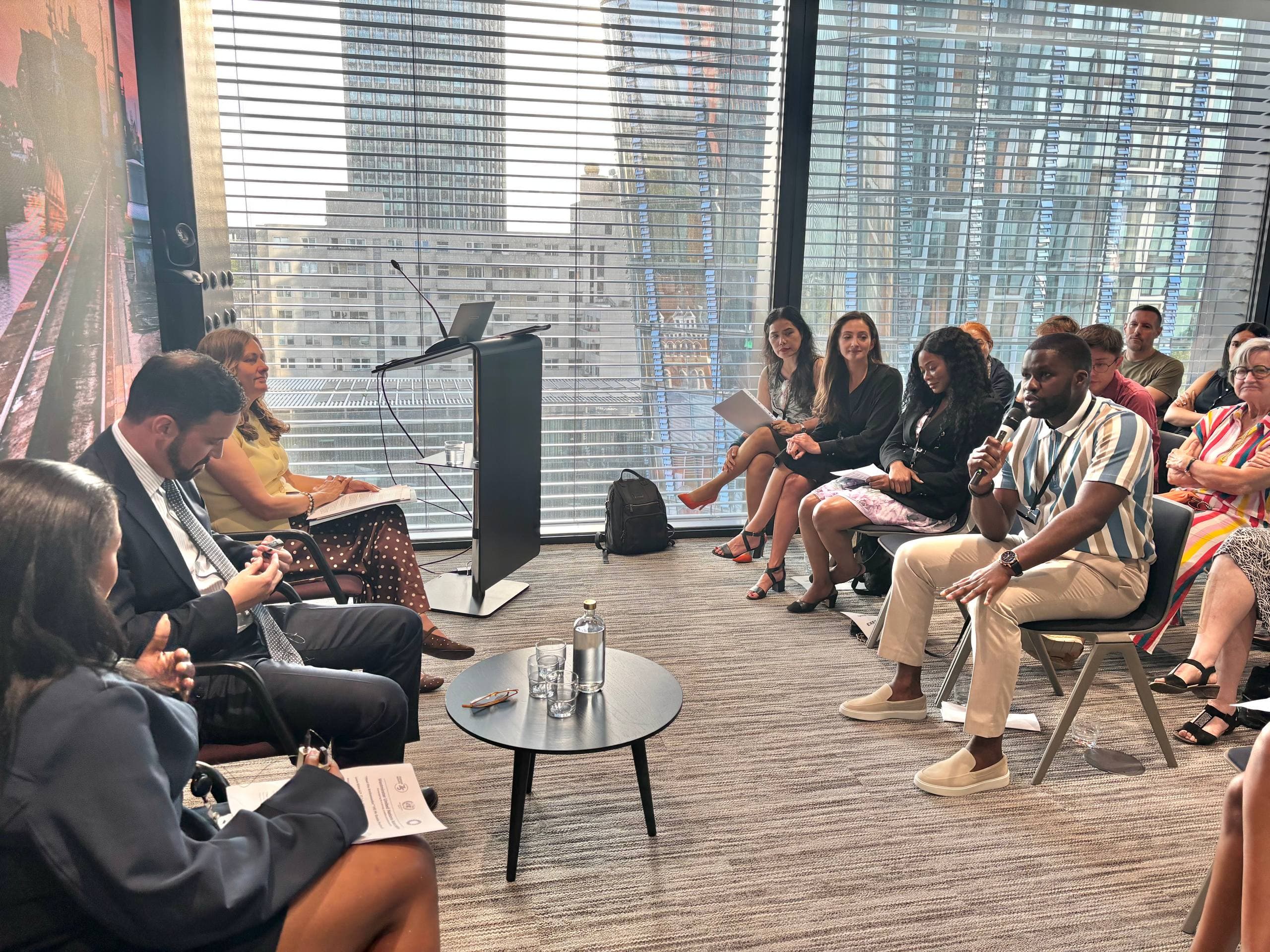
There's a particular kind of quiet that falls over a room when the people speaking have spent their careers inside a crisis rather than reading about it from a distance. I found that quiet at the House of Lords, at a panel called Food Under Fire, hosted by the United Nations Association Westminster. No slogans. No easy villain. Just three people who work inside the machinery of global hunger, telling a chamber of policymakers, diplomats, students and at least one product manager from London that the years ahead are shaping up to be among the cruellest for hunger in recent memory and that the reasons have less to do with scarcity than with what the world chooses to fund, defend and finish. I've sat in a lot of rooms that talk about impact. This was one of the rare ones that made me recalculate what I thought I understood.
The Panel The premise was simple and still landed like a gut punch: a run of freak climate conditions, layered on top of a world already stretched thin by conflict and debt, is pushing global hunger toward levels the humanitarian system hasn't had to plan for. Three voices took the question apart from three different angles, under the chairmanship of The Rt Hon Lord Bates, who held the room together and, more usefully, kept it honest. Professor Stuart Gordon, who teaches Managing Humanitarianism at the London School of Economics, walked us through the politics sitting underneath every famine, the decisions made months and years before anyone goes hungry. Jean-Michel Grand, Executive Director of Action Against Hunger UK, brought the view from the field: what it costs, in money and in time, to keep a supply chain of food moving into a place the rest of the world has stopped paying attention to. Marian Yun, speaking from the World Food Programme's London Global Office, carried the numbers the kind that are easy to read and hard to sit with. This was not a panel interested in comfortable conclusions.
The Facts Nobody Softened Here is what stayed with me, stripped of the diplomatic language it usually arrives in. Harvests across the United States and Europe have underperformed, tightening a global grain supply that was never as elastic as people assumed. The corridor that once moved grain out of the Black Sea negotiated, in no small part, through the UN's own brokering between Russia and Ukraine has effectively stopped functioning as intended, and nothing has fully replaced it. The World Food Programme is tracking 266 million people currently facing crisis-level hunger. Not food insecurity in the abstract crisis level, today. And running underneath all of it, the conflict spreading across the Middle East isn't just a humanitarian emergency in its own right; it is actively pulling money, attention and shipping capacity away from hunger response everywhere else. It's little wonder the UN Security Council itself has had to convene on the collision between conflict and hunger, the two have stopped being separate agenda items. None of the panellists needed to raise their voice to make any of this land. The facts did that on their own.
What I Kept Coming Back To Timing and finance determine what people protect. That was the thought I walked in with, and it only hardened as the panel went on. Not need. Not merit. Timing and finance. A harvest fails in a country with reserves and options, and it's a bad year. A harvest fails in a country without either, or it's a famine. The difference is rarely the weather it's what was banked, borrowed against, or bought in the years before the weather turned. That single idea reframes the headline statistic for me: 1 in 12 people on this planet are currently living in hunger. That is not a supply problem dressed up as a tragedy. It's a sequencing problem. Food exists. Money exists. What's missing, often, is the alignment of the two at the exact moment someone needs them to meet. And that sequencing is never neutral, it's political. Every panellist, in their own language, arrived at some version of a conclusion I'd already reached on my own: regional destabilisation doesn't stay regional. It moves outward, inversely, into global poverty and hunger, because conflict interrupts precisely the systems, farming, trade, aid corridors, financing that keep a bad season from becoming a catastrophe. Which means the fix was never going to be purely humanitarian either. Political action is a major factor in breaking hunger and arguably the major factor. You cannot logistics your way out of a crisis whose root cause is a decision someone in power chose not to make.
The Question I Had to Ask When the floor opened, I asked the question that had been building in me since the panel started: given the conflict currently stretching across multiple regions of the world, is the UN relapsing on its founding agenda of instituting global peace? a mandate that, when it slips, becomes a direct contributor to global poverty and hunger? It wasn't the most comfortable question to ask in a room that included people who have built their careers around that institution. I asked it anyway, because the panel had spent the last hour proving that hunger and peace aren't adjacent issues. They're the same issue, viewed from two different rooms. Professor Gordon didn't dodge it. His answer moved across several factors, but the part that stayed with me was this: the UN's deepest and most durable role isn't enforcing peace directly it's holding nations accountable to the commitments they've already made. That accountability function, even when it looks slow or toothless from the outside, is still doing real work in rooms most of us never see. It reframed the question for me without fully resolving it, which I've come to learn is usually the sign of an answer worth sitting with.
Beyond the Chamber I do the work I do in product management, in youth development, in policy conversations most people my age skip because I keep running into the same pattern: the systems that fail people rarely fail loudly. They fail quietly, in the gap between when a problem starts and when someone with the resources to fix it decides to notice. Hunger, it turns out, is that same pattern at civilisational scale. The world isn't short on food. It's short on the will to move money and attention on the same clock the crisis is running on. That's not a reason for despair. It's a reason to stay in rooms like that one, asking the questions that make people slightly uncomfortable, and building wherever I could build anything at all for the people the timing didn't favour.
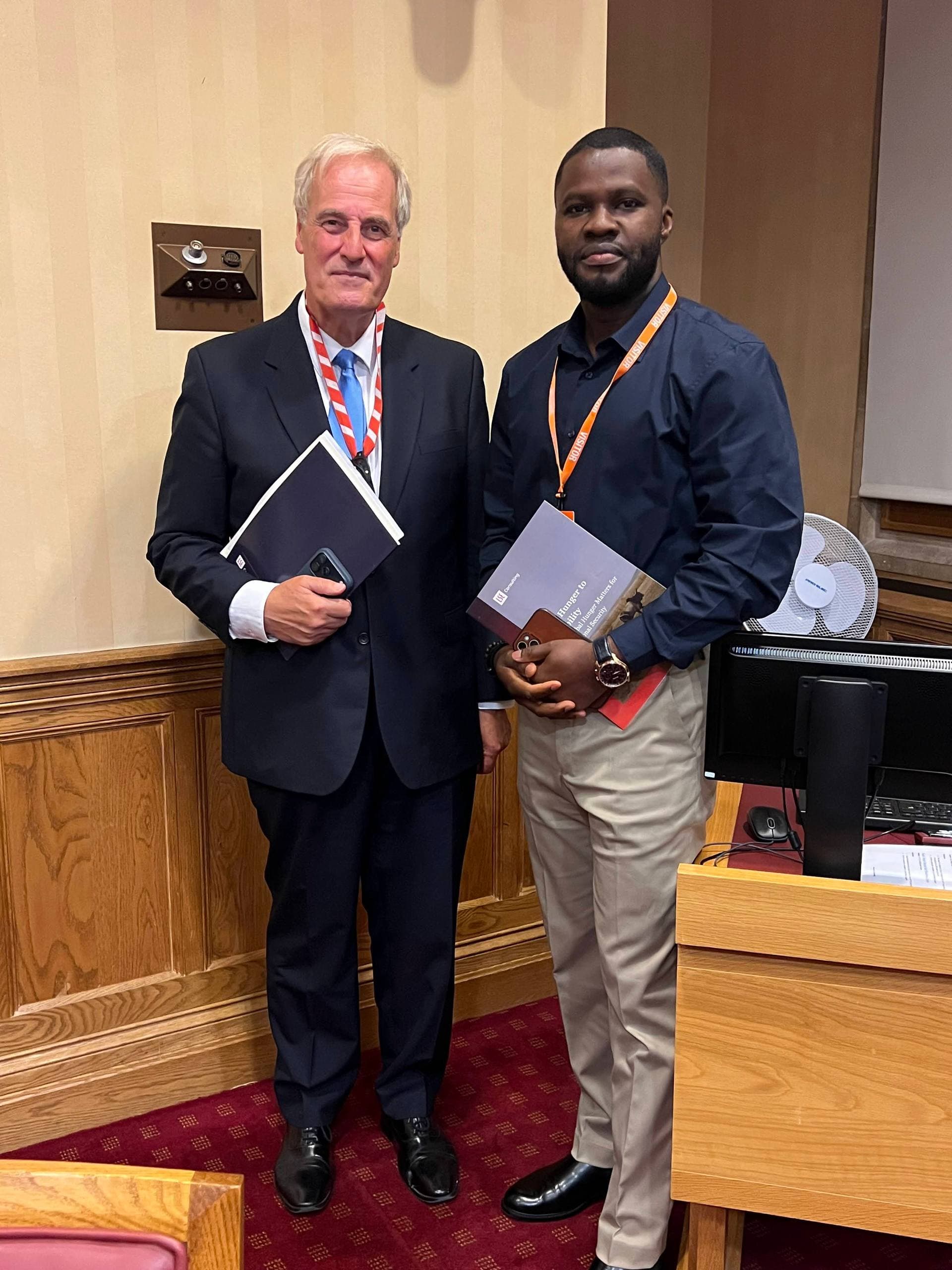
Thank You None of this happens without David Wardrop, Chair of UNA Westminster, who keeps making rooms like this one available to young people who would otherwise never get a seat near the conversation, let alone a live microphone inside it. That access is rarer than it should be. I don't take it for granted. If you were in that room, or if this is the first you're hearing of what was said in it, I'd like to know what stayed with you. The panel gave me a lot to carry out of that chamber. I suspect it did the same for everyone else in it.