Read the system honestly. Find out exactly where it's about to break. Build for that future not the one you originally planned for.
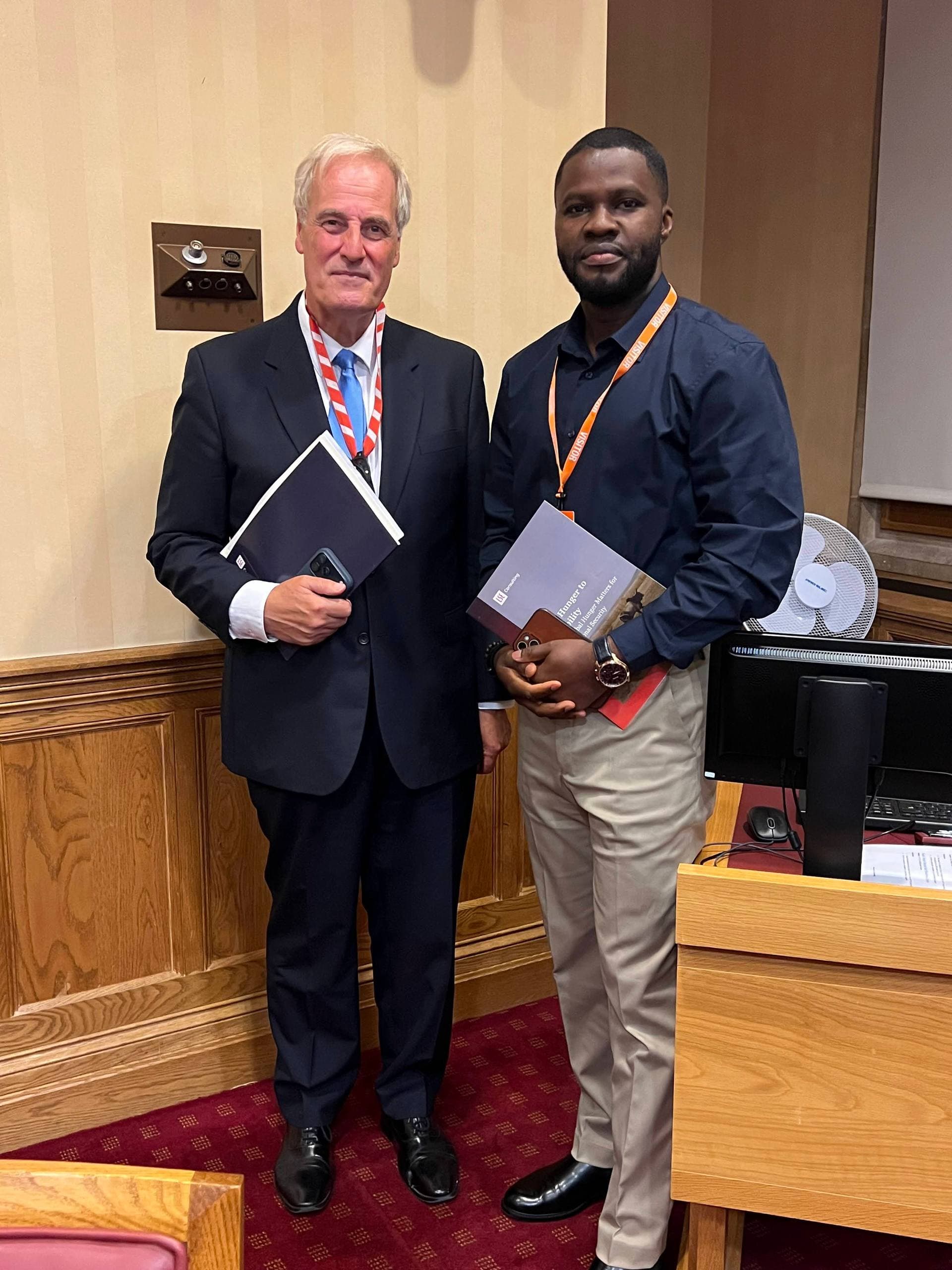
I've spent my career learning to read systems mapping where they serve people, where they quietly fail them, and what it takes to fix that. At UNA Westminster's young professionals Meet the Ambassador series, I watched a country do exactly that, live, in front of a room of people my age asking it hard questions. By the end of the evening, I realised I hadn't just heard a diplomatic briefing. I'd watched the clearest case study of product thinking I've encountered outside my own work. His Excellency Guido Martinelli, Ambassador of Panama to the United Kingdom, walked us through five hundred years of his country's history and the 111-year story of the waterway that runs through the middle of it. I left with a question answered, a country's roadmap in my head, and a sharper sense of my own discipline than I expected to find in a room about geopolitics.
Discovery:
Every product starts with someone noticing a gap nobody's closed yet. Panama a nation of about 4.5 million people, punching for outsized global relevance since long before it was a nation at all is proof of that on a nearly five-hundred-year timescale. It started in 1513, when the Spanish explorer Vasco Núñez de Balboa crossed the isthmus and became the first European to see the Pacific, what the Spanish called the “Southern Sea.” Six years later, the old city of Panama was founded on a simple, valuable insight: this strip of land was the shortest distance between two oceans, and whoever controlled it controlled the flow between them. By the early 1600s, that insight had become infrastructure. Silver from the Viceroyalty of Perú moved north across the isthmus on its way to Spain, and the Portobelo Trade Fairs turned a stretch of Caribbean coastline into one of the busiest commercial hubs in the Spanish empire. Panama declared independence from Spain in 1821 and joined Gran Colombia. Decades later, the California Gold Rush reopened the same insight for a new generation of traders in a hurry, and in 1855 the Panama Railroad one of the most profitable railways ever built. This proved again, that this thin stretch of land was worth more than almost anywhere else on Earth. In 1903, Panama became a sovereign nation, and the idea that had circled the isthmus for four hundred years finally had a country built specifically to see it through. That's discovery work, in the language I use every day at Andinoh: find the real, underlying need before you decide what to build.
Build:
Discovery only earns you the right to ship, and Panama's canal is a case study in what happens when you skip the hard parts of that process. The French went first, led by Ferdinand de Lesseps, the engineer behind the Suez Canal. The confidence he carried over from Suez wasn't enough. Tropical disease and a fundamental misread of the terrain collapsed the project in the 1880s a costly reminder that a previous win doesn't excuse you from doing the research again on new ground. The United States took over in 1903 and rebuilt the effort with the discipline the French had skipped: real engineering, real health infrastructure, real iteration. In 1914, the SS Ancón completed the first full transit, and two oceans that had never touched were finally joined by design. It's the same lesson I carry into every product I own end to end: the version that survives contact with reality is the one built on discovery that was done properly, not assumed.
Ownership:
Shipping something isn't the same as owning it. For over fifty years after 1914, Panama had built the canal's reputation without holding the keys to it. The 1964 riots were the turning point, a wave of protest that forced a reckoning over who a piece of critical infrastructure should answer to. It took until 1977, and the Torrijos–Carter Treaties, for the United States to agree to hand the canal back. On the last day of 1999, it finally did. What Panama built with that ownership is the part of the story I find most instructive. The canal isn't run as a monument. It's run by the Panama Canal Authority, an independent public entity with a board appointed by the President and National Assembly, operating under a constitutional guarantee of neutrality: a permanent, inalienable asset, open to every nation on equal terms, with revenue that flows directly into Panama's own government and infrastructure. It's a model international observer have praised for its transparency and reinvestment. That's the version of ownership I recognise not just holding the product, but running it accountably, for the people it's meant to serve. It's the same instinct behind why I insist on owning my own work at Andinoh from discovery through to delivery, rather than handing pieces of it off along the way.
Scale:
A product that stops evolving becomes a museum piece, no matter how well it was built. Panama didn't let that happen. In the past 25 years, the country has doubled the canal's total capacity. The centrepiece was 2016: a third set of locks, the Neopanamax expansion, one of the largest infrastructure projects in the country's and the region's history, which lifted traffic capacity by 50% in a single move. That appetite for growth isn't limited to the canal. Panama's economy has grown at an average of 5% a year for two decades, reaching a GDP of $90.6 billion in 2025, built across logistics, financial services, tourism, agroindustry, and manufacturing a diversified portfolio, not a single point of failure. It's the same principle behind any roadmap I'd call resilient: don't scale one feature and hope it holds the whole system up.
The Edge Case:
Every system, however well built, eventually meets the condition nobody road-mapped for. For the Panama Canal, that condition arrived in 2023: the worst drought the region had faced in over a century, disrupting a route that moves roughly 5% of the entire world's maritime trade. Daily crossings were cut roughly in half at the drought's peak. Costs rippled out to shippers in Asia, Europe, and North America within weeks. It was serious enough to draw international coverage, including from Reuters, on just how exposed even the most trusted infrastructure in the world had become. I don't think less of a system for hitting an edge case like that. I think less of a system that doesn't have an honest answer for it afterward.
The Fix:
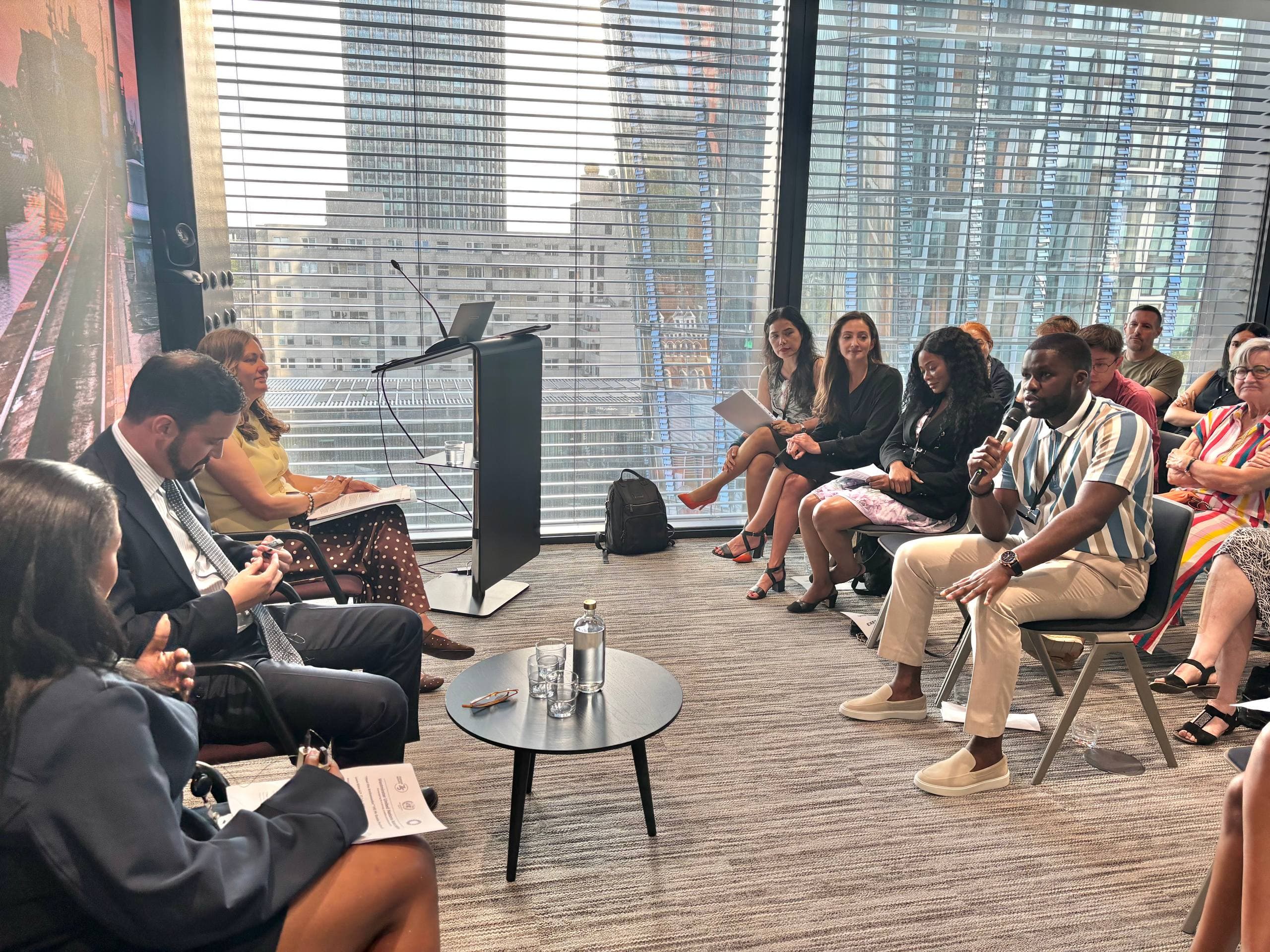
That's exactly what I wanted to hear from the Ambassador last night, and I put the question to him directly: after a drought like that, what is Panama doing to make sure it doesn't happen again and does the fix hold? His answer wasn't a soundbite. He walked the room through the emergency water restrictions imposed during the drought, the renewed debate over alternative routes it reopened, and the initiative at the centre of Panama's response: the Río Indio project, a plan to divert water from the Río Indio basin into Lake Gatún, permanently boosting the canal's freshwater supply while securing water access for the communities living around it. It's the same test I hold my own product decisions to: "Read the system honestly. Find out exactly where it's about to break. Build for that future not the one you originally planned for" That instinct is exactly what I heard in his answer. Not a patch to get through the next dry season. A rebuild, aimed directly at the failure condition itself.
What I Carried Out of That Room:
I attended UNA Westminster's Meet the Ambassador event as the Founder of YANGG and a member of the Young Professionals Executive Committee, one voice in a room full of people who'd come to ask real questions, not make small talk. That's the entire premise of the series, and it's the same instinct I've built YANGG around: put people early in their careers in the room with the decision-makers and let them ask what they want to know. But I came away thinking less about diplomacy and more about my own discipline. Whether it's a 111-year-old canal moving 5% of the world's trade, a hospitality platform I'm building for travellers global platforms overlook, or a network connecting 5,000-plus young Africans across seventeen countries, the method doesn't change: read the system honestly, find who or what it's failing, and build for that not for the version of the world you assumed when you started. The evening closed with a networking session that made the same point in miniature: a room of young professionals, still talking trade routes and climate resilience over drinks, refusing to wait for a formal invitation to engage with the world's biggest questions. Whether the system in question moves ships or serves the people a market overlooked, the discipline is the same. That's the job. I plan to keep doing it.